TRIBUTE TO LOUIS ERLO (1929-2026)
Share
The Festival d’Aix-en-Provence pays heartfelt tribute to the memory of Louis Erlo, who has died at the age of 97. Director of the Festival from 1982 to 1996, he left a profound mark on its history through his taste for discovery, his exacting theatrical standards and his ability to bring artists together around new adventures, several of which became landmarks in the recent history of opera. The first staged production of Rameau’s Les Boréades (1982), Jessye Norman’s Phèdre in Hippolyte et Aricie (1983), Purcell’s The Fairy Queen (1989) with William Christie and Adrian Noble, and Britten’s A Midsummer Night’s Dream (1991), staged by Robert Carsen, are among the memories that continue to live on in Aix and bear witness to the richness of those fifteen editions.
When he succeeded Bernard Lefort in 1982, Louis Erlo had already known the Festival for many years – he first discovered it in 1952, according to an interview he did with Le Monde (17 June 1982). He was deeply attuned to the spirit instilled by Gabriel Dussurget: the search for talent, curiosity about different works, the convergence of music and the performing arts, and the unique intimacy that exists between a production, a venue and the audience. He wanted to preserve that balance while continuing the Festival’s vocation for exploration. “Aix must remain a home for operatic innovation”, he declared in the same interview. This active allegiance to the Festival’s history would guide his programming, giving works a real chance, offering fresh ways for them to be heard and staged, and making every production a genuine artistic project.
With his very first summer, this ambition found spectacular expression. On 21 July 1982, Les Boréades, Rameau’s final opera, received its world stage premiere at the Théâtre de l’Archevêché, nearly 220 years after it was composed. John Eliot Gardiner, who had already presented the opera in concert form, conducted the English Baroque Soloists on period instruments and the Monteverdi Choir, and Jean-Louis Martinoty staged the production. The work of Catherine Turocy and the New York Baroque Dance Company restored dance to its rightful place within the drama. The event went far beyond the mere rediscovery of a score: it helped renew Rameau’s presence on the operatic stage and established Aix as one of the leading centres of the revival of French Baroque opera.
The following year, Hippolyte et Aricie maintained this momentum. Under Gardiner’s musical direction and in the on-stage world created by Pier Luigi Pizzi, Jessye Norman portrayed Phèdre with a tragic grandeur that remains inseparable from the Festival’s history. At her side, José van Dam, Rachel Yakar, John Aler and Jules Bastin also took part in this encounter between exceptional voices and a renewed musical approach. The exploration continued with Campra’s Tancrède (1986); Lully’s Psyché (1987); and, with William Christie and Les Arts Florissants, Les Indes galantes (1990), staged by Alfredo Arias, and Castor et Pollux (1991), with Pizzi. In this way, Louis Erlo helped create a lasting transformation of the operatic landscape, giving works that had been long absent from the repertoire the means to reconnect with audiences.
This curiosity naturally extended to Mozart. Under Erlo’s directorship, the composer once again occupied a central place, and his work was explored in all its diversity. Mitridate, re di Ponto (1983), followed by La finta giardiniera (1984) in its Italian version, broadened Aix’s Mozartian horizons. Beyond the familiar masterpieces themselves, these scores made it possible to hear the development of Mozart’s dramatic genius in a new light. This commitment to the composer who had long been the Festival’s presiding spirit helped carry on the exploration of his works and their interpretation, driven by a keen sense of theatre and a sustained attention to ensemble work.
With The Fairy Queen, Louis Erlo gave this conception of performance even greater importance. William Christie and Adrian Noble brought together singers, actors, dancers and instrumentalists around Purcell; and Francine Lancelot and Béatrice Massin contributed to this intersection of disciplines. The enchantment, comedy and poetry of Shakespeare unfolded in an ambitious undertaking that demonstrated how the rediscovery of an old work could inspire fresh theatrical invention.
Two years later, Britten’s A Midsummer Night’s Dream offered the Théâtre de l’Archevêché another of its most enduring enchantments. Conducted by Steuart Bedford and staged by Robert Carsen, the production transformed the courtyard into a world of blue and green, of desire, dreams and metamorphoses. The trust placed in the young Canadian stage director, after an initial collaboration in Lyon, resulted in a towering achievement. With revivals in numerous venues and a return to Aix in 2015, this Dream bears witness to the long life that productions may enjoy when they are born of the right meeting between a work and its artists.
The Erlo years also opened the Festival to other horizons. Ariadne auf Naxos (1985) and Der Rosenkavalier (1987) – both conducted by Semyon Bychkov – formed an important Strauss chapter. Prokofiev’s The Love for Three Oranges (1989), which Erlo himself staged with Alain Maratrat, under the baton of Kent Nagano, burst with the colours of fable and fantasy; Stravinsky’s The Rake’s Progress (1992) extended the exploration of twentieth-century repertoire. Contemporary music theatre also found its place, with works by Berio, Aperghis and Claude Prey. Concerts and recitals complemented this programming, which included major works of sacred music as well. Recordings of Les Boréades and Tancrède, released by Erato Records, further extended the reach of these Aix rediscoveries.
Behind these choices was a man with first-hand knowledge of the practical crafts of the theatre. Born in Lyon in 1929, Louis Erlo began his career at the city’s opera house as a stage manager, then as a stage director, before taking charge of the institution in 1969. The “Opéra Nouveau” he developed there combined a revitalisation of the repertoire, the creation of new works, an emphasis on the audience, and a transformation of working methods. His collaboration with Jean-Pierre Brossmann helped give the house an international profile. As head of the Opéra Studio de Paris from its creation in 1973 until 1979, he was also deeply involved in the training of young singers.
At Aix, this experience translated into close attention to the preparation of productions, rehearsals and ensemble work. His connections with Lyon fostered co-productions. Working with Jean-Louis Pujol and the Festival’s teams, Erlo sought to gather the means necessary to achieve his artistic ambitions. The transformation of the Théâtre de l’Archevêché in 1985 also broadened the possibilities for staging.
The end of his tenure was overshadowed by the financial difficulties experienced by the Festival. His final edition nevertheless featured Handel’s Semele (1996), with William Christie and Robert Carsen, a last collaboration under his directorship with two artists who had contributed so much to his years at Aix.
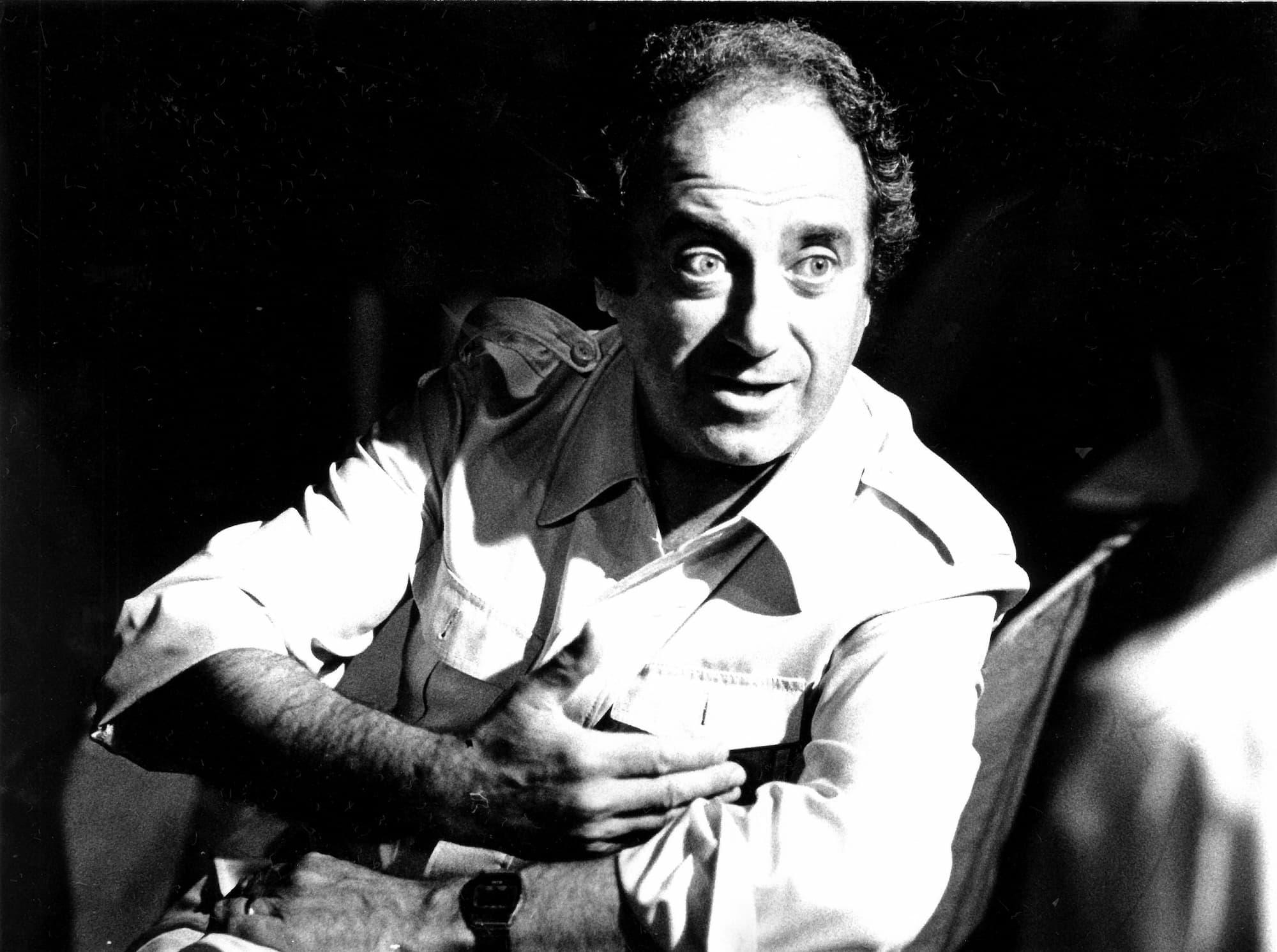
Louis Erlo, 1982 © Ville d'Aix-en-Provence

The Fairy Queen, 1989 © Henry Ely
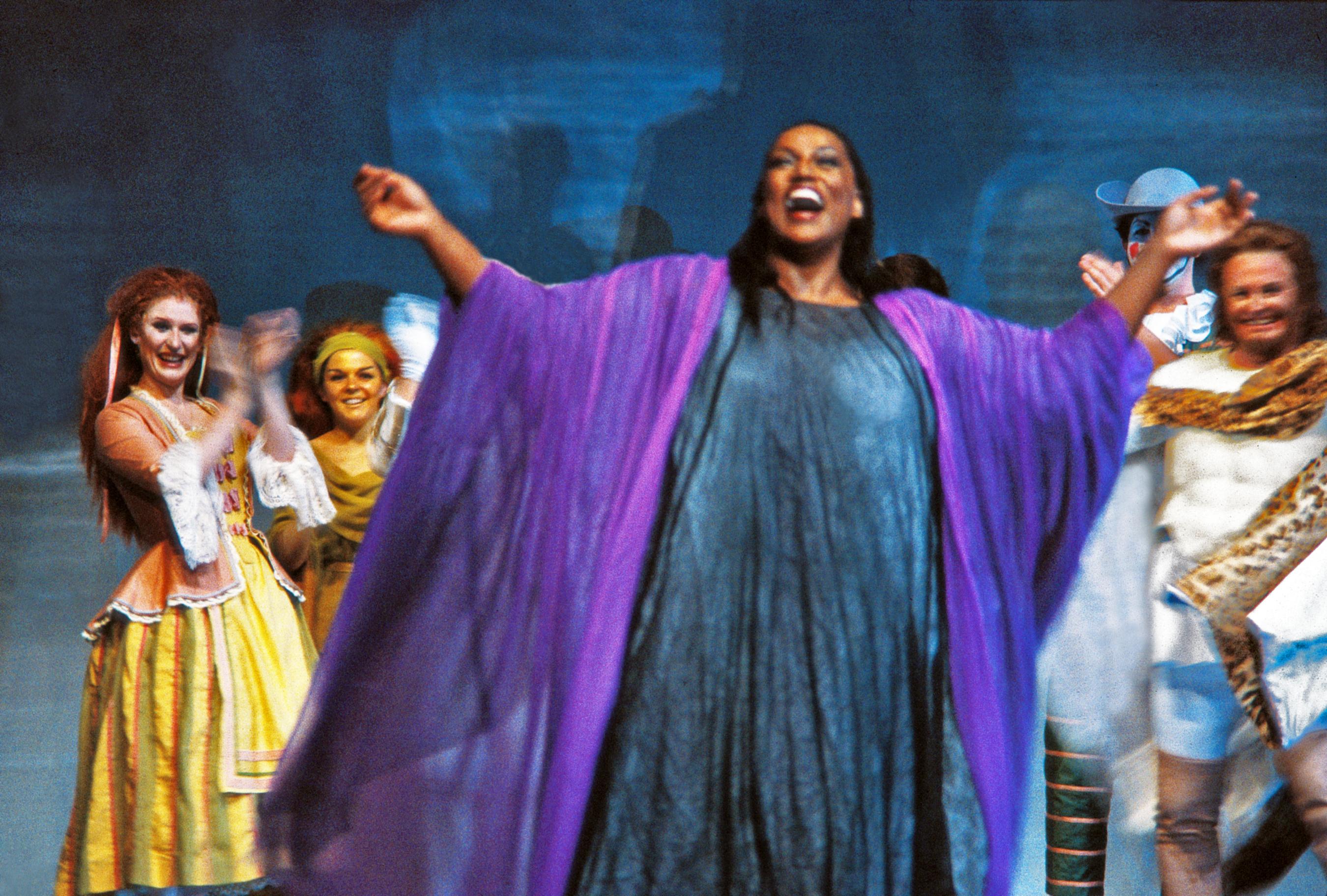
Jessye Norman offering her final salute at the close of Ariadne auf Naxos on the stage of the Théâtre de l’Archevêché, 1986 © Henry Ely
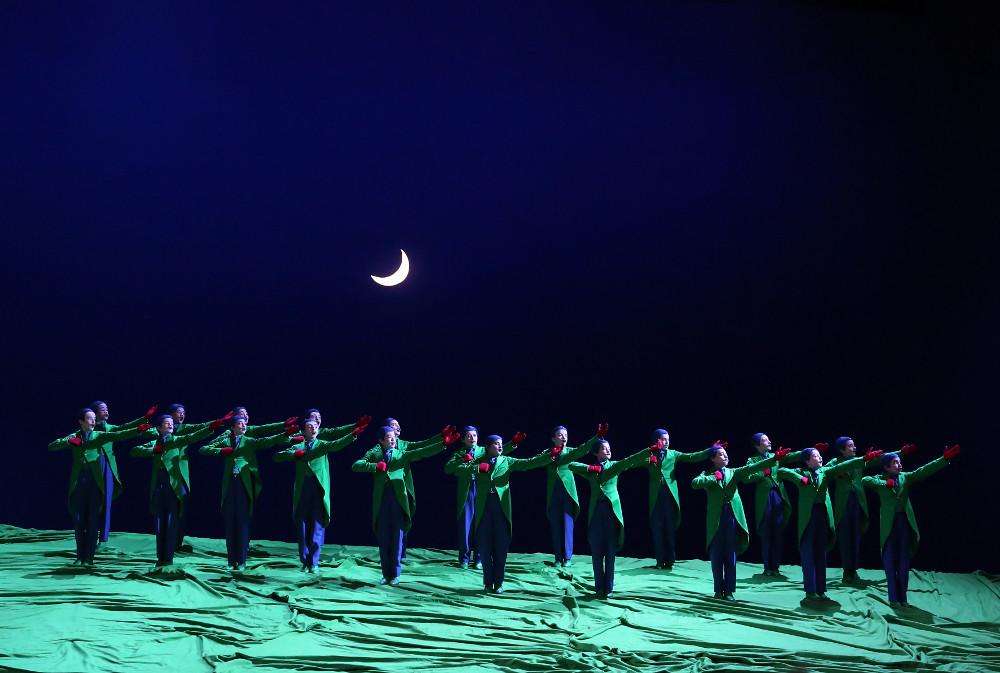
A Midsummer Night’s Dream, stage direction Robert Carsen
Revived at the 2015 Festival d’Aix-en-Provence © Patrick Berger
