[ REHEARSAL NOTES ] DIE ZAUBERFLÖTE
Share
Monday, 8 june 2026, 9.30 p.m. — Théâtre de l'Archevêché — Festival d’Aix-en-Provence
As daylight fades over the Théâtre de l’Archevêché, the teams working on Die Zauberflöte (The Magic Flute) prepare for their second on-site rehearsal. The full cast for Act I is present and, for the occasion, the singers have been invited to take a backstage tour of this truly unique venue.
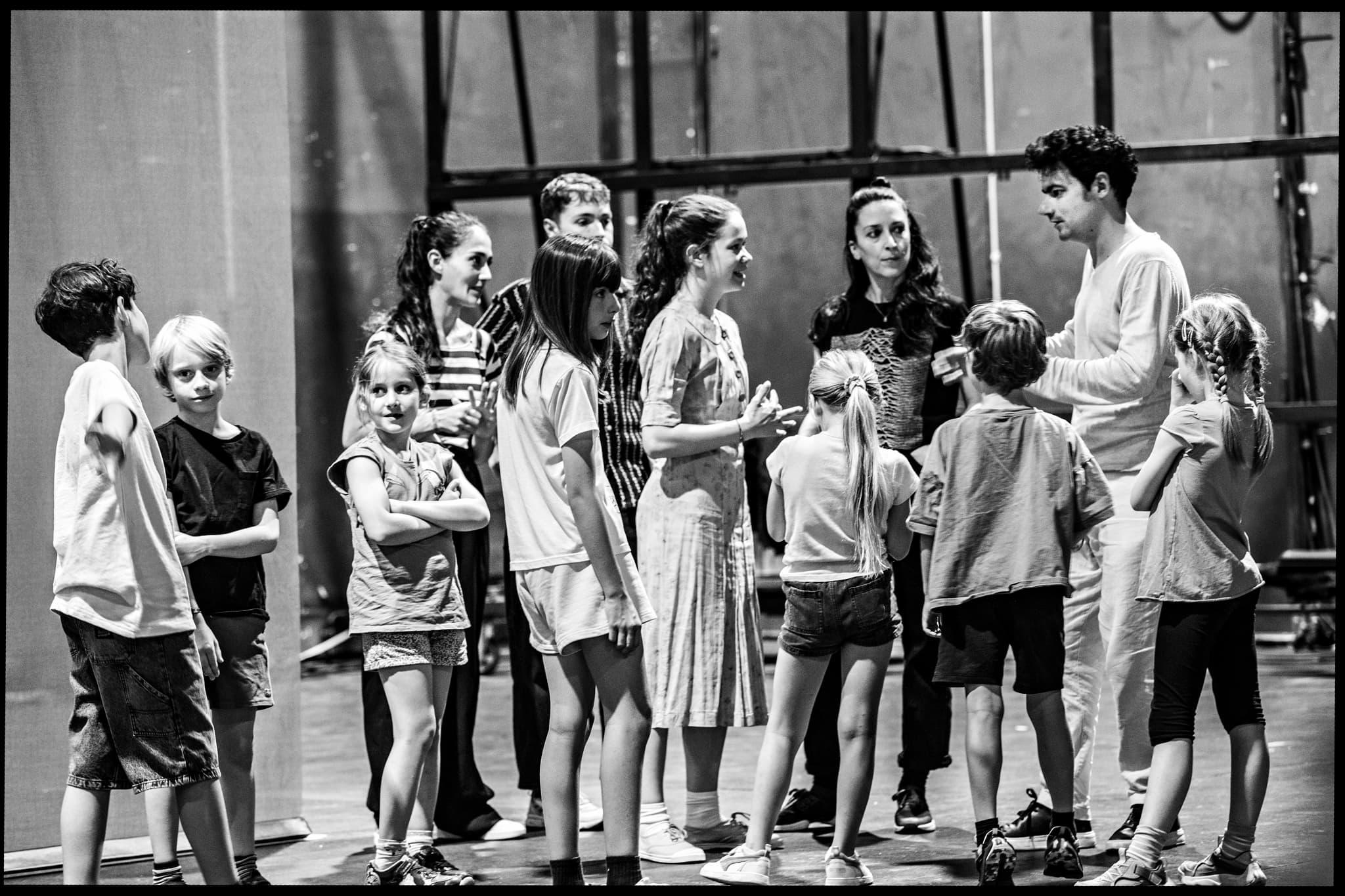
A swift perched high atop the stage wall is stealing the spotlight from the performers for a few seconds. Before the run-through begins, all the teams take part in a ritual of introductions designed to forge connections between all those who contribute, each in their own way, to the same production. Gradually, a large circle forms on the stage of the Théâtre de l’Archevêché, bringing together artists, technicians and members of the administrative staff.
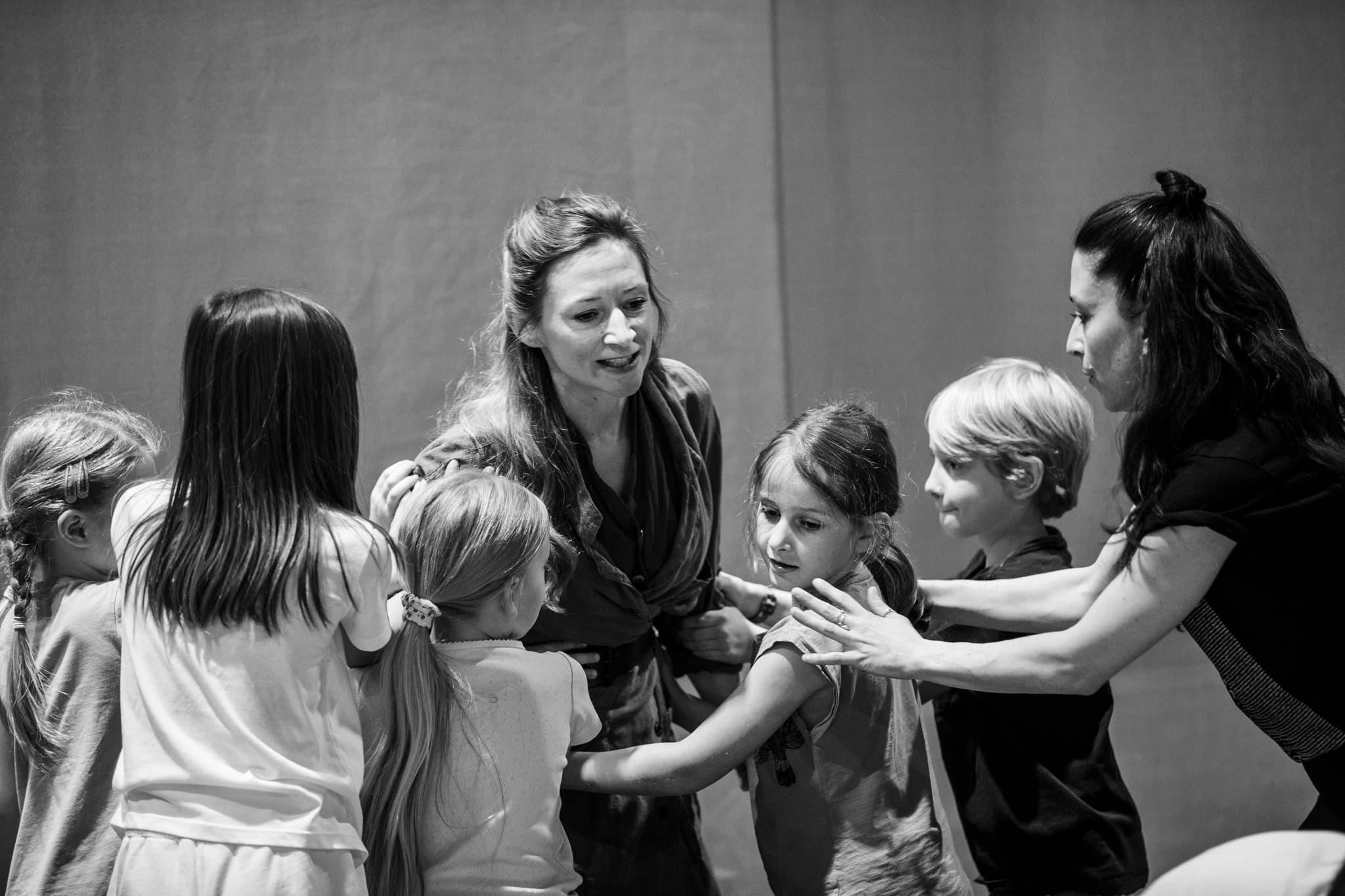
The occasion also provides an opportunity to introduce themselves to the children involved in the production. As Die Zauberflöte (The Magic Flute) is a Singspiel with spoken dialogue in German, the children are German-speaking, although one of the two boys present this evening is bilingual and proudly sports a Kylian Mbappé football jersey. The round of introductions begins. Sean Michael Plumb, a towering American baritone performing the role of Papageno (the Bird Catcher), with his bird-catcher’s panpipes hanging around his neck, attempts a joke by introducing himself as die Königin der Nacht (the Queen of the Night), but is quickly corrected. After that, everyone returns to their place. On the evening’s programme is the first act of Mozart’s final masterpiece, the work he was reportedly still humming on his deathbed in 1791, at the age of just thirty-five.
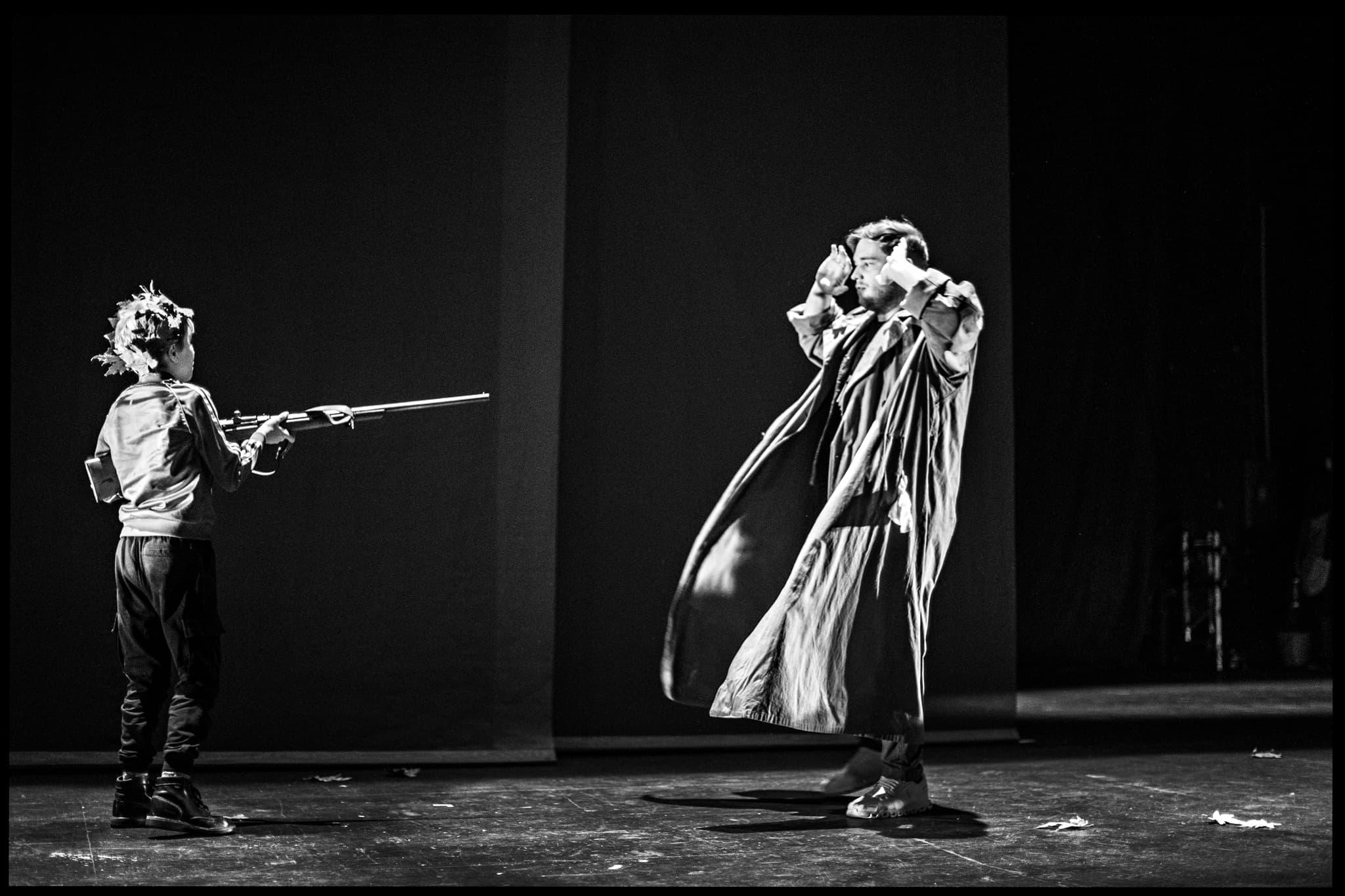
The aim of this piano staging rehearsal, following several weeks of rehearsals in the Venelles studios, is to become fully acquainted with the space in which the performances will take place. At the piano, Xavier Dami begins directly with the closing bars of the overture, while Kyrian Friedenberg, assistant conductor, beats time. The backdrops are set in motion, the projections begin, and Julian Mahnke, here representing Tamino as a child, enters, pulling a cart piled high with rags and sheets.
His task is to assemble a makeshift bed, but immediately a problem arises: the blanket is no longer the one used during the first rehearsals, and this one is either too long or too heavy for him. Moreover, the blankets must not extend too far downstage, where the Drei Damen (Three Ladies) will shortly be passing. The stage management team join the boy to find a solution. Meanwhile, the choreographer Evelin Facchini goes over the Drei Damen’s (Three Ladies’) movements during their highly contrasted trio. The same ritual is repeated each time an element of the staging needs to be adjusted. Clément Cogitore, the stage director, takes up his microphone and thanks the teams; the piano falls silent; and everyone involved in the staging crosses the auditorium, climbs onto the stage and gathers around the performers.
Then Dagmar Pischel, the production’s artistic collaborator, indicates the precise bar from which rehearsals will resume, and the pianist gives the singers their starting note. In this way, the work is repeatedly revisited and refined, according to the painstaking attention to detail and precision that lie at the heart of every rehearsal process.
Thus the rehearsal returns to this opening scene featuring Tamino as a child. Then Sean Michael Plumb’s Papageno bursts onto the stage, genial but faint-hearted. Everything is proceeding smoothly when a cry of delight rings out from the auditorium: the other boy, Yvon Moltzen, who is waiting for his turn to rehearse, is watching a football match, and France have just scored against Northern Ireland.
Meanwhile, Sabine Devieilhe, die Königin der Nacht (the Queen of the Night), listens attentively to her colleagues from the front rows of the auditorium. There is no way of knowing when she will be called to the stage to sing her first aria, ‘O zittre nicht, mein lieber Sohn’. Emma Fekete, who performs the role of Pamina, is attending the rehearsal for her own enjoyment. She knows that she will not be singing this evening, but has come to immerse herself in the production, gently blowing on a cup of hot tea.
Shortly afterwards, it is the turn of the second child portraying Tamino to rehearse the opening of the opera. The scenery is put back to its starting position, the gauzes are restored to their overlapping positions, and the piano picks up again at the very same bars. Night has now finally fallen, but the rehearsal is only halfway through: after the break, work must resume on the same act. Thus, in the gentle comfort of an Aix summer night, as the first stars begin to twinkle, the delicate machinery of the production slowly clicks into place.
Guillaume Picard
English translation by Christopher Bayton
La Flûte enchantée - Festival d'Aix-en-Provence 2026 © Jean-Louis Fernandez
Répétitions de La Flûte enchantée de Mozart
Festival d'Aix-en-Provence 2026 © Jean-Louis Fernandez
Répétitions de La Flûte enchantée de Mozart
Festival d'Aix-en-Provence 2026 © Jean-Louis Fernandez
